
For sportswear brands, distributors, sports clubs, and private-label businesses, approving a sample is one of the most important steps before placing a bulk order. A garment may look attractive in a product image, but its actual fabric, fit, stitching, colors, and customization details can only be properly assessed by examining the physical sample.
This is especially important when developing custom sportswear, where product quality must meet brand expectations while remaining consistent across dozens, hundreds, or even thousands of garments. A sample that does not accurately represent the final production specifications can lead to sizing complaints, printing defects, unexpected costs, and delays after a bulk order has been placed.
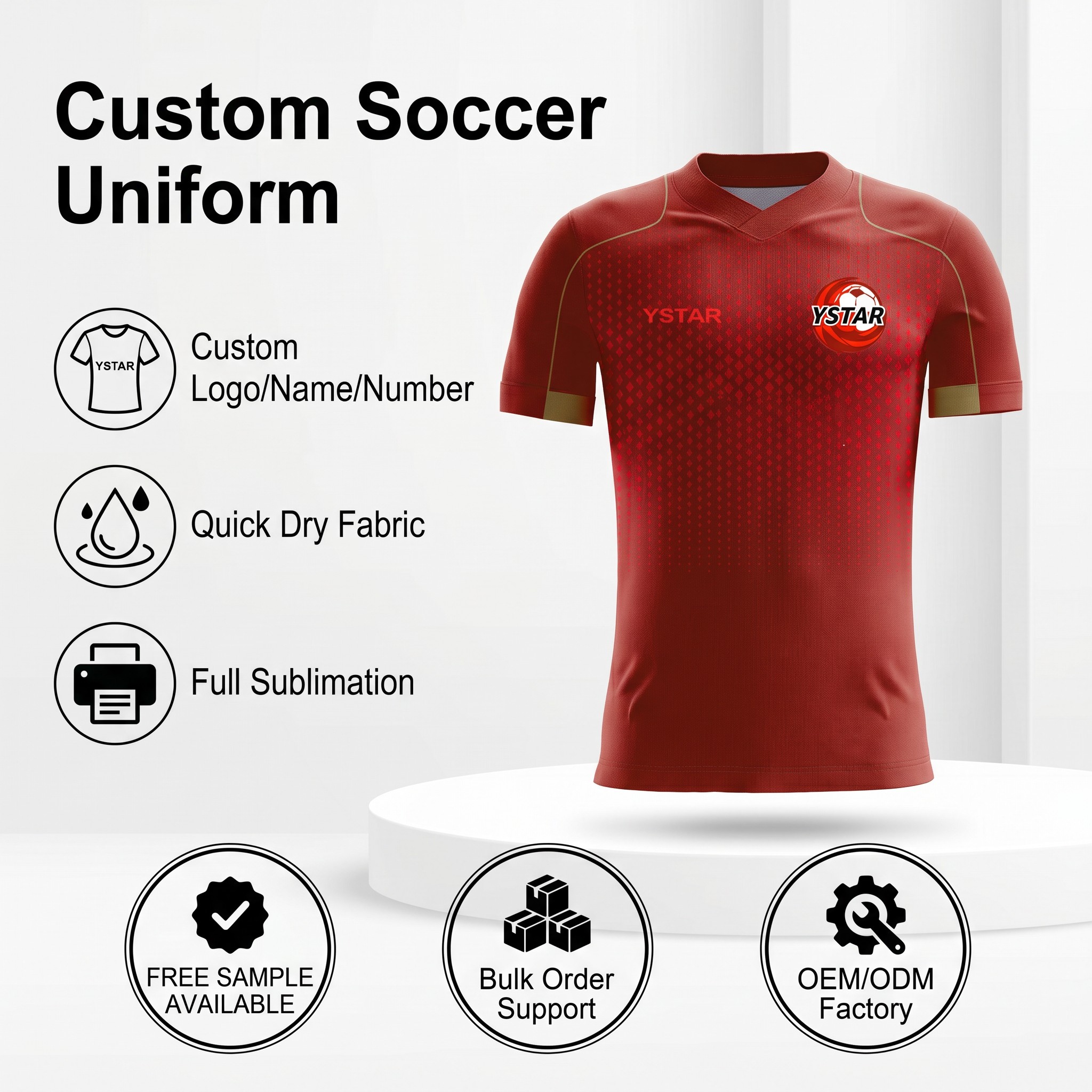
For buyers working with a custom sportswear manufacturer, sample evaluation should be a structured process rather than a quick visual check. By reviewing the right details and documenting feedback before approval, businesses can reduce production risks and establish a clearer quality standard for the finished products.
Whether you are developing custom soccer jerseys, basketball uniforms, baseball jackets, or a new teamwear collection, the following checklist can help you evaluate samples with greater confidence.
The first step is to compare the physical sample with your approved design concept or technical specification.
A sample may appear generally correct while still containing small differences that become obvious when the product is examined closely. These differences can involve garment proportions, panel placement, collar shapes, sleeve details, or decorative elements.
For custom sportswear projects, review the following points:
Overall garment shape and silhouette
Front and back design details
Collar, neckline, and sleeve construction
Color-blocking and panel arrangement
Decorative trims and other design features
Position and proportions of logos and graphics
For example, a custom soccer jersey may feature contrasting side panels, a specific collar shape, and sponsor graphics in designated positions. If these elements differ from the approved artwork, the sample should be reviewed before production proceeds.
The same principle applies to basketball uniforms, where neckline proportions, armholes, side panels, and decorative edging can significantly affect the final appearance.
Prepare a copy of the approved design and compare it with the physical sample point by point. If changes are necessary, mark them clearly and communicate them to the manufacturer.
This creates a shared reference and reduces the risk of different interpretations during bulk production.
Fabric quality directly affects how sportswear looks, feels, and performs. Even when the design is correct, unsuitable material can make the finished product uncomfortable or inconsistent with the intended market position.
When evaluating a sample, examine the fabric under normal lighting and, where possible, wear the garment or assess it under conditions similar to its intended use.
Important factors include:
Fabric texture and hand feel
Check whether the material feels appropriate for the product. It should match the expectations established during product development.
Weight and thickness
Consider whether the fabric is suitable for the intended sport, climate, and garment style. A lightweight jersey and a structured sports jacket have different material requirements.
Breathability and comfort
For garments intended for active use, assess whether the material provides the expected comfort and airflow.
Stretch and recovery
If the garment is designed to stretch, check whether the fabric moves comfortably and returns to its original shape without excessive deformation.
Surface consistency
Look for visible irregularities, stains, holes, snagging, or other defects that may affect appearance or durability.
YSTAR's customization offering includes different material options for sportswear projects. When discussing fabric selection with the manufacturer, buyers should confirm the exact material specifications rather than relying on general descriptions such as "premium fabric" or "high-performance material."
If a particular fabric has been approved, ensure that the bulk order is based on the same agreed specification. Any proposed substitution should be discussed and approved before production.
Sizing is one of the most important aspects of sportswear sample evaluation because inconsistent measurements can create problems across an entire order.
A sample that looks good on a model may not fit the intended customer group. For teamwear, fit also needs to remain consistent across different sizes so that clubs can distribute garments to players without unnecessary exchanges.
Start by obtaining the agreed measurement chart from the manufacturer. Measure the sample using consistent methods and compare the results against the specified dimensions.
Depending on the garment, relevant measurements may include:
Chest width
Body length
Shoulder width
Sleeve length
Waist width
Hip width
Inseam or outseam
Collar and armhole dimensions
Not every measurement applies to every product, so the checklist should reflect the garment's construction.
It is also important to distinguish between body measurements and finished-garment measurements. A body measurement describes the wearer, while a garment measurement describes the physical product. Confusing the two can lead to incorrect conclusions about fit.
When trying on a sample, evaluate whether the garment allows the intended range of movement. For example, a soccer jersey should support comfortable movement during running and kicking, while a basketball uniform should allow sufficient freedom around the shoulders and arms.
If the fit is too tight, too loose, or inconsistent with the intended design, record the required adjustments before approving the sample.
For bulk production, also confirm how the manufacturer will grade the pattern across the complete size range. Approving one sample size does not automatically establish that every size will fit correctly.
A professional-looking sample should have consistent stitching and construction appropriate for its intended use.
Although small construction defects may not be immediately visible in product photographs, they can affect garment durability and customer satisfaction after repeated wear and washing.
Inspect the following areas carefully:
Main seams and joining points
Collar and neckline construction
Sleeve attachments
Hem finishing
Thread trimming
Seam alignment
Reinforcement at relevant stress points
Areas where several fabric panels meet
Look for skipped stitches, loose threads, uneven seams, puckering, or visible construction inconsistencies.
For sportswear designed for frequent physical activity, pay particular attention to areas that experience repeated movement or tension. The required construction standard will depend on the garment design, fabric, and intended application.
If the sample contains a construction issue, take a close-up photograph and identify the exact location. Clear visual feedback is often more effective than a general comment such as "improve the stitching."
Before approving the sample, confirm that the manufacturer understands the required correction and can incorporate it into the production specifications.
Customization is central to many sportswear projects. Brand logos, club emblems, sponsor graphics, player names, and numbers help distinguish the product and communicate its identity.
These details deserve particular attention during sample approval because a small mistake can affect the appearance of the entire order.
For custom sportswear, check:
Logo accuracy
Confirm that the correct artwork and logo version have been used.
Placement and alignment
Compare the logo position with the approved design. Check its distance from seams, garment edges, and other graphics.
Size and proportions
Make sure the logo or graphic has the intended dimensions and has not been stretched or distorted.
Color accuracy
Compare the sample with the approved color reference. Remember that digital screen colors may not reproduce physical colors exactly.
Decoration quality
Look for uneven printing, blurred edges, peeling graphics, embroidery defects, or other problems relevant to the selected decoration method.
Personalization accuracy
For team uniforms, verify player names, numbers, and other individualized details against the approved information.
For example, a custom soccer jersey may require a club badge on the chest, a sponsor logo on the front, and a player number on the back. All elements should be checked for both visual accuracy and consistency with the approved design.
If the order contains multiple customization methods, each should be evaluated separately. Sublimation printing, heat transfer, screen printing, and embroidery have different characteristics and may require different inspection criteria.
Once the sample is approved, retain the approved artwork files and record the agreed placement and dimensions. This helps prevent errors when the manufacturer moves from sample development to bulk production.
Color is an important part of brand identity, especially for sports clubs and private-label sportswear businesses.
A sample should be checked for consistency between different garment panels, trims, logos, and printed elements. Even small differences can make a uniform look less professional when several garments are displayed together.
Evaluate the sample under consistent lighting conditions and compare it with the agreed color references.
Look for:
Differences between main fabric panels
Inconsistent colors between fabric and trims
Variations between printed graphics and the approved artwork
Uneven color application
Visible marks or discoloration
If a specific color standard has been agreed upon, use that reference during evaluation rather than relying only on memory or a digital image.
For larger collections, it may be useful to compare several samples or material swatches together. This can help identify differences that are difficult to notice when examining one garment in isolation.
Color approval is particularly important when a brand plans to reorder the same design in future seasons. Documented references help establish a consistent target for subsequent production batches.
Sportswear should not only look right; it should also suit the activity for which it is intended.
A sample evaluation should therefore include practical checks based on the product's purpose. The goal is to determine whether the garment meets the agreed functional requirements, not to assume that every sportswear product needs the same performance characteristics.
For active teamwear, consider:
Freedom of movement
Comfort around the shoulders and arms
Breathability during activity
Fabric flexibility, where relevant
Whether seams or trims cause irritation
Whether the garment maintains its intended shape during movement
For example, a basketball uniform may need to allow unrestricted arm movement, while a training shirt may require a comfortable fit during repeated exercise.
If moisture management, quick drying, stretch recovery, or other performance features are important to the product, discuss how these requirements should be evaluated. Visual inspection alone cannot confirm every fabric performance claim.
Where necessary, request appropriate test information or agree on suitable testing before bulk production.
For brands selling performance-oriented sportswear, confirming these requirements early helps align the product with customer expectations and the intended market position.
A garment may look excellent when new but still develop problems after repeated washing or use. Where durability is important, buyers should consider whether additional evaluation is needed before approving the product.
Potential concerns include color fading, shrinkage, seam damage, fabric deformation, and deterioration of printed or applied graphics.
Depending on the material and decoration method, relevant evaluations may include:
Dimensional stability after washing
Colorfastness to washing or rubbing
Print or graphic adhesion
Seam strength
Fabric pilling resistance
Shape retention after repeated use
Not every test is necessary for every product. The appropriate checks depend on the intended application, buyer requirements, and applicable product standards.
If the product will be marketed with specific performance claims, those claims should be supported by suitable evidence rather than assumed from the sample's appearance.
Brands should also confirm that care labels and washing instructions are appropriate for the selected materials and construction.
For a custom sportswear manufacturer, clear durability requirements help define the quality expectations that should be maintained during production.
Sample approval should cover the complete product experience, not just the garment itself.
For private-label brands, labels and packaging help present the product professionally and reinforce the brand identity. For distributors and teamwear suppliers, correct packaging can also simplify storage, order sorting, and delivery.
Depending on the project, check:
Main brand label
Size label
Care and composition information
Hangtags
Individual packaging
Folding method
Packaging materials
Carton or product identification requirements
If the buyer requires garments to be packed individually or grouped by size, these instructions should be confirmed before the bulk order begins.
Labels should also be reviewed for accuracy and applicable market requirements. Requirements vary by destination and product, so buyers should verify the relevant rules before finalizing the product.
Packaging may seem like a minor detail, but missing labels or incorrect packing instructions can create additional work after the garments have been manufactured.
Approving these details during development helps reduce avoidable corrections at the final stage.
One of the most important questions is whether the approved sample can serve as a realistic reference for mass production.
A sample may be acceptable in appearance but still contain unresolved issues involving material availability, sizing, customization methods, construction, or production feasibility.
Before giving final approval, discuss the following points with the manufacturer:
Are all materials and colors confirmed?
Have the garment measurements been approved?
Are artwork files and personalization details finalized?
Are construction requirements clearly documented?
Have necessary revisions been completed?
Are inspection criteria agreed upon?
Are the required quantities and size breakdown confirmed?
Have production lead times and delivery expectations been discussed?
For bulk orders, the manufacturer should understand which sample and technical documents represent the final approved specifications.
If a change is made after approval, the buyer should confirm whether a revised sample or additional verification is necessary. Significant changes to fabric, fit, artwork, or construction should not be implemented without agreement.
This step helps prevent the common problem of receiving bulk garments that differ from the sample the buyer originally approved.
Sample evaluation becomes much more effective when feedback is specific, organized, and documented.
Instead of sending a general message saying that the garment needs improvement, identify the exact issue and describe the expected correction.
For example:
Current issue: Chest logo is positioned too close to the neckline.
Required change: Adjust the logo position according to the approved artwork.
Current issue: Body length is shorter than the specified measurement.
Required change: Revise the pattern to meet the approved measurement and tolerance.
Current issue: Player numbers appear inconsistent with the design reference.
Required change: Confirm the correct artwork, size, color, and placement before production.
Photographs, annotated sketches, measurement records, and revised artwork can make feedback easier to understand.
Both parties should also confirm when the correction has been completed and whether the revised sample requires another approval.
This process creates a clear record of decisions and reduces the risk of unresolved comments being overlooked during production.
For brands managing multiple products, maintaining a sample approval record for each style can also improve coordination across the entire collection.
Even experienced buyers can overlook details when working under tight deadlines. Avoiding the following mistakes can help reduce risks before placing a bulk order.
Approving a sample based only on appearance
A visually attractive garment may still have measurement, construction, or functional problems. Review the product against its specifications.
Ignoring the size chart
A sample in one size does not guarantee consistent sizing across the complete range. Confirm the grading plan and required tolerances.
Failing to verify customization details
Incorrect logos, colors, names, or numbers can affect an entire order. Check the actual sample against approved files.
Overlooking fabric specifications
Do not rely only on a general fabric description. Confirm the material requirements and clarify any substitutions.
Leaving feedback undocumented
Verbal comments or vague instructions can be interpreted differently. Record required changes and confirm the final approved version.
Assuming bulk production will automatically match the sample
Sample approval establishes a reference, but the manufacturer still needs clear specifications and suitable production quality controls.
Approving before all critical decisions are finalized
Unresolved materials, artwork, sizing, or construction details may create delays or additional costs later.
A disciplined sample approval process gives buyers a stronger foundation for moving into bulk production.
YSTAR focuses on custom sportswear and teamwear, including custom soccer uniforms, basketball uniforms, and baseball jackets. Its website describes a customization process involving design development, sample confirmation, and production.
For sportswear brands, sports clubs, distributors, and private-label businesses, this process provides a framework for discussing product requirements before committing to a larger order.
When preparing a custom sportswear project, buyers can share their design concept, logo files, fabric preferences, size specifications, personalization requirements, and target order quantities. These details help establish the product expectations that should be reviewed during sampling.
During sample evaluation, buyers should pay particular attention to the garment's fit, fabric, construction, colors, and customization details. Any necessary changes should be communicated clearly and confirmed before final approval.
For teamwear orders, it is also important to discuss how player names, numbers, size distributions, and other individual requirements will be managed during bulk production.
By aligning product specifications and approval requirements early, brands can make the transition from design development to manufacturing more organized and predictable.
YSTAR's custom sportswear services give businesses a starting point for discussing these requirements and developing products suited to their intended market and brand identity.
Before approving a sample, review the following items:
Design and garment construction match the approved concept
Fabric meets the agreed material specifications
Measurements and fit are acceptable
Stitching and finishing meet expectations
Logos, graphics, names, and numbers are accurate
Colors match the approved references
Functional requirements have been evaluated where necessary
Relevant durability checks have been completed or agreed upon
Labels and packaging details are confirmed
All requested sample revisions have been addressed
Final specifications and inspection criteria are documented
Order quantities, size breakdown, and delivery expectations are confirmed
The checklist can be adapted to the complexity of the product. A simple training shirt may require fewer checks than a customized teamwear collection containing multiple garment styles, colors, and individual player details.
The important point is to establish clear acceptance criteria before bulk production begins.
Evaluating sportswear samples carefully helps brands reduce manufacturing risks, improve product consistency, and protect customer satisfaction. By checking design accuracy, fabric quality, measurements, stitching, customization, durability, and packaging, buyers can identify issues before they affect a larger order.
For businesses developing custom soccer jerseys, basketball uniforms, or private-label sportswear, sample approval also creates a shared understanding between the buyer and the manufacturing partner.
Working with a suitable custom sportswear manufacturer is an important step, but successful production also depends on clear specifications, documented feedback, and timely approval decisions.
YSTAR supports custom sportswear development for businesses looking to create branded teamwear and related products. Before placing your next bulk order, prepare your product requirements, evaluate the sample against agreed specifications, and confirm that all critical details are resolved.
A carefully approved sample is more than a product prototype. It is the foundation for a more consistent bulk order, a better customer experience, and a stronger sportswear brand.
For sportswear brands, football clubs, distributors, and teamwear retailers, maintaining consistent colors and designs across bulk football jersey orders is essential to product quality and brand identity. When hundreds or thousands of jerseys are pr...
READ MORE
Ordering custom sportswear involves more than choosing a design and negotiating a unit price. For sportswear brands, distributors, sports clubs, and online retailers, three factors can significantly affect the success of a production order: minimum o...
READ MORE
For a growing sportswear business, winning the first few club orders is an important milestone. Supplying custom football jerseys to a local team or basketball uniforms to a sports academy helps establish customer relationships, test product quality,...
READ MORE