
For a growing sportswear business, winning the first few club orders is an important milestone. Supplying custom football jerseys to a local team or basketball uniforms to a sports academy helps establish customer relationships, test product quality, and generate initial revenue. But moving from occasional orders to long-term distributor programs requires a more structured business model.
Distributors typically need more than customized garments. They expect consistent product specifications, competitive pricing, dependable replenishment, flexible product options, and a manufacturing partner that can support growing demand. Meeting these expectations requires sportswear businesses to rethink how they develop products, manage production, organize customer information, and plan inventory.
A professional sportswear manufacturer can play an important role in this transition. By building repeatable manufacturing processes and establishing clear communication with suppliers, sportswear brands and distributors can increase order volume without allowing operational complexity to grow at the same rate.
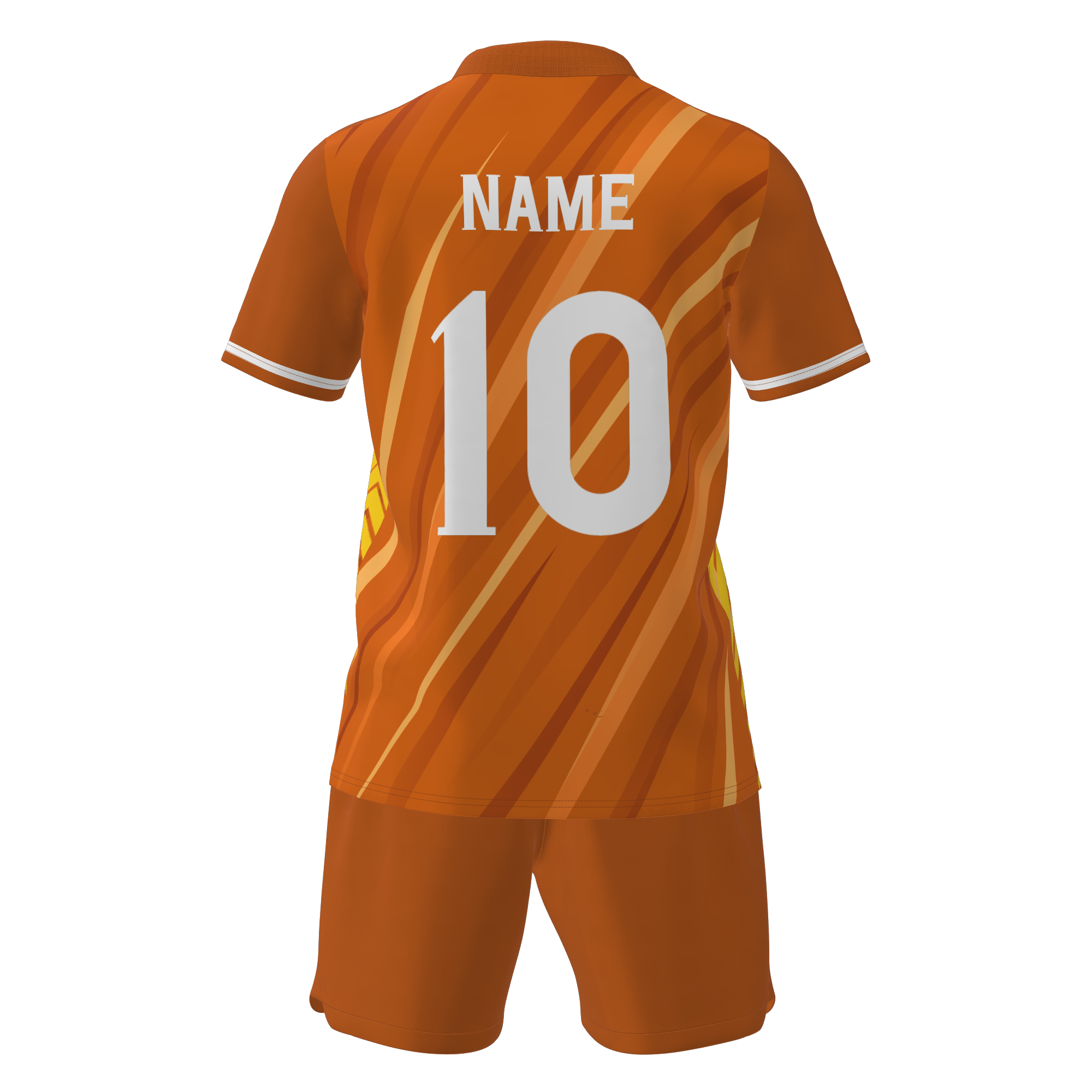
Not every business should immediately pursue large distributor contracts. Before increasing order volume, evaluate whether your current operations can handle additional customers without compromising quality or delivery performance.
Several signs may indicate that your business is ready for the next stage.
Repeat orders are becoming more frequent. Existing clubs and retailers are returning for additional products, suggesting that your core product range has established demand.
Customers are requesting more product options. Buyers may want additional colors, new garment styles, or complementary teamwear products.
Order administration is consuming more time. Managing individual quotations, artwork files, size lists, and delivery schedules manually may become increasingly difficult.
Manufacturing requirements are becoming more predictable. You understand which products sell consistently, which customization options are most common, and what production lead times are realistic.
You have a clearer picture of product profitability. You can estimate the full cost of fulfilling an order rather than relying solely on the quoted garment price.
These indicators provide a stronger foundation for growth than simply accepting the largest order available. Scaling should follow demonstrated demand and operational readiness.
Club orders often begin as individual projects. Each customer provides a design, selects garment specifications, confirms quantities, and requests delivery by a particular date.
This approach can work at a small scale, but it becomes difficult to manage when dozens of customers require different products simultaneously.
To support growth, separate the repeatable parts of the business from the customer-specific details.
For example, your business can standardize core garment specifications, size charts, artwork requirements, quotation templates, and order confirmation procedures. Customers can still choose their own logos, team colors, names, and numbers within the available customization options.
This creates a more efficient operating model.
A standardized workflow can include:
Customer inquiry and requirement collection
Product selection and quotation
Artwork preparation and approval
Sample development when required
Final quantity and size confirmation
Manufacturing and quality inspection
Shipping and delivery confirmation
Follow-up for feedback and repeat orders
Documenting this workflow makes it easier to train staff, identify bottlenecks, and maintain a consistent customer experience as the business expands.
The objective is to avoid treating every order as an entirely new project when much of the process can be reused.
Distributors need products that are straightforward to explain, quote, promote, and reorder. A catalog containing too many similar styles can create unnecessary confusion, while a limited range without clear differentiation may not serve enough customer needs.
A practical starting point is to establish a core collection around the products your business already understands.
For example, a teamwear business may organize its range into:
Match jerseys and complete football kits
Basketball jerseys and uniforms
Training shirts and performance tops
Youth teamwear
Selected complementary apparel products
Each category should have clear product specifications and a defined target customer.
Within a category, create meaningful product options rather than endless variations. A standard performance jersey and a premium customized jersey, for example, may serve different budgets and branding requirements.
For each product, prepare a specification sheet covering fabric, garment measurements, fit, decoration options, available sizes, labels, and packaging.
This gives distributors a reliable reference when presenting products to their own customers. It also makes quotations more consistent and reduces repeated clarification during the ordering process.
Distributor programs often involve larger orders or more frequent purchases than individual club orders. Buyers may expect volume-based pricing, but discounts must be supported by the actual cost structure.
A pricing model should account for manufacturing, customization, packaging, logistics, and other applicable expenses. It should also distinguish between one-time development costs and recurring production costs.
A simple way to begin is to request quotations at several quantity levels.
For example, a hypothetical garment may have the following quoted production prices:
| Order quantity | Illustrative unit price | Total garment cost |
|---|---|---|
| 100 pieces | $12.00 | $1,200 |
| 500 pieces | $10.00 | $5,000 |
| 1,000 pieces | $9.20 | $9,200 |
These figures are illustrative rather than actual supplier quotations. Real prices depend on garment construction, fabric, customization, order configuration, and manufacturing conditions.
The lower unit price at higher quantities may improve the distributor's margin, but it also increases the cash required for purchasing inventory.
Before offering volume discounts to customers, calculate the minimum acceptable margin and determine which costs can genuinely decrease with larger orders.
Also consider whether several customer orders can be consolidated into a production run. This may improve purchasing efficiency, but only when product specifications, materials, and manufacturing requirements are compatible.
The manufacturer that works well for occasional small orders may not automatically be suitable for a growing distributor program.
As purchasing volume increases, the consequences of inconsistent sizing, delayed production, incorrect personalization, or unavailable materials become more significant. A supplier should therefore be evaluated against the business's future requirements, not only its current order size.
Important evaluation criteria include:
Product experience: Does the manufacturer have relevant experience with the garments in your product range?
Customization capabilities: Can it manage the required fabrics, printing, logos, names, numbers, and labels?
Sampling and development: Can it produce samples that accurately reflect the intended bulk product?
Production planning: Can it explain minimum quantities, material availability, production scheduling, and expected lead times?
Quality management: Are product specifications and inspection procedures clearly defined?
Repeat-order support: Can approved samples, artwork, and measurements be used as references for future orders?
Communication: Does the supplier communicate changes, potential delays, and production milestones clearly?
A suitable manufacturing partner should be able to discuss these requirements openly. Buyers should also verify the supplier's capabilities for each specific product rather than assuming all garment categories use identical processes.
Customization helps sportswear businesses stand out, but uncontrolled variation can make larger orders harder to manage.
Distributor programs may involve different club logos, sponsor graphics, team colors, player names, and numbering systems. Every additional variation creates information that must be checked before production.
A scalable approach combines a standard production framework with clearly defined customization options.
Request high-quality logo files and establish clear rules for artwork submission. Confirm acceptable file formats, color references, logo placement, and print specifications before production.
Record player names, numbers, sizes, and team assignments in a consistent format. Confirm who is responsible for checking the list before it is released to manufacturing.
Use clear file names and version control so that outdated artwork is not accidentally reused. Record any changes approved by the customer.
Agree on the point after which changes to artwork, quantities, or personalization may affect the production schedule or cost.
These measures reduce unnecessary communication and make it easier to process several customer orders in parallel.
Quality control becomes more important as a business serves more customers and increases its production volume.
A single defect in a small order may be manageable. Similar problems across a distributor's entire shipment can lead to complaints, replacement expenses, and damage to long-term relationships.
The solution is to establish measurable product requirements before production begins.
For custom sportswear, relevant checks may include:
Fabric composition and weight
Garment measurements and tolerances
Fit and construction
Color consistency
Logo and graphic placement
Printing quality and durability requirements
Stitching and finishing
Correct names and numbers
Labels, packaging, and quantities
Retain an approved sample or documented product specification for every core product. For repeat orders, use these records to verify that the new batch follows the agreed requirements.
For personalized garments, review the data before production and verify critical details during final inspection.
It is also useful to record recurring defects and their causes. If the same problem appears across several orders, the business can work with its manufacturer to improve the process instead of repeatedly correcting individual shipments.
Moving into distributor programs can increase order volume, but it can also increase the amount of cash tied up in stock.
The risk is particularly relevant to custom teamwear because garments with specific club logos, sponsor designs, or player details may not be suitable for resale to other customers.
Inventory planning should distinguish between products that can be sold to multiple customers and products that are made for a specific order.
Standard products: Selected unbranded or standardized garments may justify holding stock when demand is reasonably predictable.
Customized products: Customer-specific designs are often better planned around confirmed orders, approved specifications, and agreed production schedules.
Repeat-order products: For established distributor accounts, historical sales and seasonal demand can help determine when replenishment should begin.
Before increasing inventory, evaluate the product's sales history, size distribution, expected turnover, storage requirements, and replenishment lead time.
A distributor may request a large order to secure a lower price, but the purchasing decision should still be based on realistic demand rather than unit cost alone.
The goal is to maintain sufficient product availability without creating unnecessary financial pressure.
Sportswear purchasing is often influenced by tournament schedules, school calendars, league seasons, and retail promotions. Orders may arrive in concentrated periods rather than at a steady rate throughout the year.
For businesses moving into distributor programs, seasonal planning becomes essential.
Start by reviewing previous sales and identifying periods when customers are most likely to place orders. Ask key distributors to share forecasts where possible, while recognizing that forecasts may change.
Then work backward from the required delivery date.
The planning process should account for:
Final product specifications
Sample development and approval
Material preparation
Bulk manufacturing
Quality inspection
Packing and dispatch
Transportation and customs clearance, where applicable
Clarify whether the manufacturer's quoted lead time covers production only or the complete delivery process.
For major seasonal orders, establish approval deadlines and agree on when the quantity, artwork, and size breakdown must be finalized.
Early planning provides more flexibility when several customers need products during the same period. It also reduces the risk of promising delivery dates that cannot be met.
Distributors often manage several customers at once. If every order requires a different quotation format, inconsistent product descriptions, and repeated clarification, the supplier relationship becomes harder to scale.
A standardized ordering system makes the business easier to work with.
Consider preparing a distributor information package containing:
Product catalog and specifications
Size charts
Customization options
Minimum order requirements
Quotation and payment terms
Sample procedures
Production and delivery estimates
Packaging options
Reorder instructions
For repeat products, maintain consistent product codes and reference the approved specifications in each new quotation.
A centralized order tracker can record order status, artwork approval, payment, production progress, inspection, and shipping details. Even a well-organized spreadsheet can be useful when the business is beginning to manage a larger number of orders.
As volume grows, the process can be upgraded to more advanced order-management tools.
The most important principle is that sales, purchasing, production, and customer service should work from the same confirmed information.
A distributor's reputation depends partly on the products and service it receives from its suppliers. Consistent quality, accurate order fulfillment, and clear communication can therefore become meaningful competitive advantages.
To build a stronger relationship, focus on several areas.
Specify what is included in the quoted price, including customization, labels, packaging, and shipping where applicable. Clarify any additional charges before the order is confirmed.
Provide updates at meaningful milestones, particularly when a schedule changes or a decision is needed from the customer.
Retain approved designs, samples, measurements, and material specifications so that repeat orders can be managed more efficiently.
When an issue arises, document the problem, establish the facts, and agree on corrective action. A clear process is more effective than relying on informal promises.
For regular distributor accounts, periodically review order accuracy, product feedback, delivery performance, and future demand.
These practices help transform the supplier relationship from a series of transactions into a more predictable long-term business arrangement.
Once the business has established a reliable process for its core products, it may consider adding new teamwear categories.
A business focused on football kits might explore basketball uniforms or training apparel to serve existing customers more comprehensively. However, every new category introduces its own specifications, sampling requirements, pricing considerations, and potential minimum order quantities.
Before expanding, ask:
Is there demonstrated demand from current or prospective customers?
Does the new product fit the brand's positioning?
Can the manufacturer produce it to the required specifications?
Are the expected margins commercially viable?
Will the new category complicate inventory or order management?
Can the business maintain quality standards as the range grows?
A phased approach helps validate demand before making a substantial investment.
Rather than launching many categories simultaneously, introduce the most promising product first, collect customer feedback, and refine the offering before moving to the next opportunity.
For brands, distributors, and retailers developing custom teamwear, YSTAR Sportswear provides customization and manufacturing services for products including football kits and basketball uniforms.
Its customization process covers design development, sampling, order confirmation, production, and shipment. These stages offer a framework for discussing product specifications and evaluating the requirements of a bulk order.
Businesses preparing to move from club orders to distributor programs can organize their requirements before contacting a manufacturer.
Useful information includes the current product range, expected order quantities, target customer segments, preferred fabrics, customization requirements, quality standards, and expected reorder frequency.
It is also helpful to identify which products will be ordered regularly and which will be produced only for individual customers. This distinction supports more practical discussions about production planning and inventory requirements.
By establishing clear product specifications and a repeatable order process, businesses can create a stronger foundation for handling larger orders and serving more customers.
For companies evaluating manufacturing partners, the priority should be a supplier relationship that supports both current requirements and realistic future growth.
Scaling from club orders to distributor programs requires a shift from handling individual projects to building a repeatable supply system. Standardized product specifications, structured customization, accurate costing, effective inventory management, and consistent quality control all become increasingly important as order volume grows.
Choosing the right sportswear manufacturer can help businesses establish the production foundation needed for larger and more frequent orders. However, sustainable growth also depends on understanding customer demand, protecting cash flow, and making realistic commitments about quality and delivery.
Start with a focused product range, document the processes that work, and expand in stages as customer demand becomes clearer. With disciplined planning and reliable manufacturing support, a sportswear business can build stronger distributor relationships and develop a more scalable teamwear operation.
A soccer jersey is more than a piece of sportswear. It represents a club's history, values, colors, and ambitions. From local community teams and youth academies to professional clubs and sports organizations, a consistent team appearance helps playe...
READ MORE
Designing custom soccer jerseys involves more than choosing colors and adding a team logo. For soccer clubs, youth academies, and organized leagues, a successful uniform design should reflect the team's identity, support player comfort, accommodate d...
READ MORE
For organizations that manage multiple sports teams, developing custom team uniforms requires careful coordination across different sports, age groups, performance requirements, and budgets. A football team may need lightweight jerseys designed for o...
READ MORE