
Choosing the right basketball uniforms is an important decision for schools, basketball clubs, and sports academies. Uniforms need to provide comfort during training and competition, accommodate different age groups, represent the team's identity, and withstand repeated use and washing. For organizations purchasing uniforms in bulk, the selection process also involves sizing, customization, budget planning, delivery schedules, and long-term replacement needs.
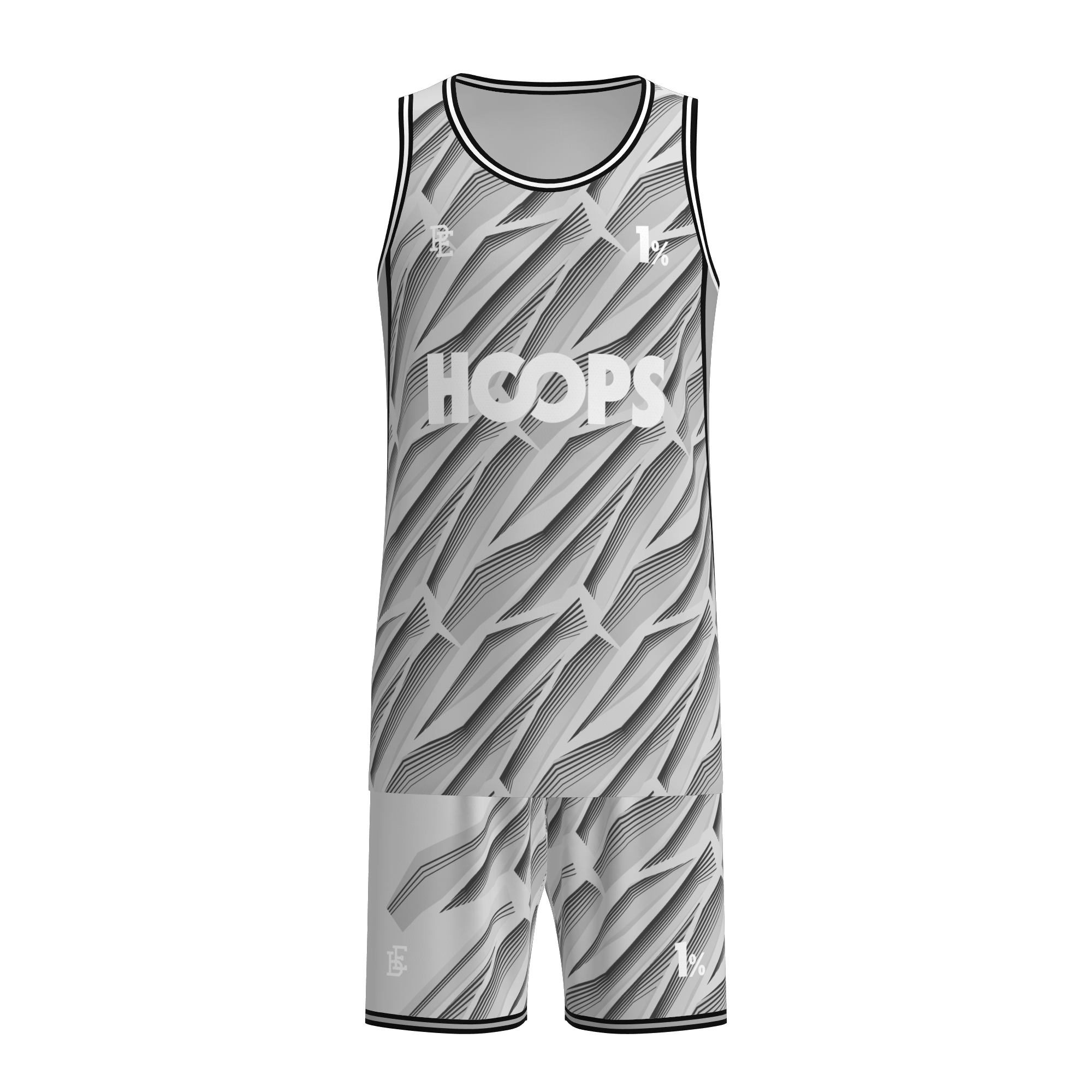
For sportswear brands, teamwear distributors, and organizations ordering directly from a manufacturer, a structured evaluation process helps reduce purchasing risks and improve product consistency. Rather than choosing uniforms based on appearance or price alone, buyers should assess how well the garments meet their players' needs and the organization's operational requirements.
Before comparing basketball uniforms, define how the garments will be used and who will wear them. Schools, clubs, and sports academies may all need basketball apparel, but their priorities can differ significantly.
School basketball programs often serve students across several age groups. Uniforms must accommodate different body proportions, provide comfortable movement, and remain practical for regular physical education classes, training sessions, and interschool competitions.
Schools may also need uniforms that are easy to identify, straightforward to distribute, and simple to reorder when new students join the team. A consistent color scheme and clear school logo can help establish a recognizable team identity.
Basketball clubs may participate in regular leagues, regional competitions, and tournaments. Their uniforms should balance visual identity with performance, particularly when players train frequently or compete throughout the season.
Clubs may require home and away colorways, personalized player names and numbers, coordinated shorts, and consistent designs across different age groups. A reliable replenishment process is also important when rosters change or existing uniforms need replacement.
Sports academies often manage several teams, development groups, and training programs. Their purchasing requirements may include adult and youth sizes, practice jerseys, competition uniforms, and additional apparel for coaches or academy staff.
Standardized designs can make it easier to maintain a consistent academy identity while using different color combinations or identifiers for each team. For academies operating year-round, durability and repeat-order consistency may be just as important as the initial purchase price.
Defining these needs first makes it easier to select the right product specifications and compare manufacturer quotations on an equivalent basis.
Fabric is one of the most important factors when choosing basketball uniforms. Players frequently sprint, jump, change direction, and move their arms rapidly, so their uniforms should support movement while remaining comfortable during sustained activity.
Polyester is widely used in basketball apparel because it is lightweight, durable, and compatible with several sportswear printing methods. However, not all polyester fabrics perform identically. Fabric structure, weight, finishing, and construction can affect comfort and long-term appearance.
When evaluating materials, consider the following factors.
Breathability: Basketball generates considerable body heat. Breathable fabrics and suitable mesh structures can help improve airflow and reduce the feeling of excessive heat.
Moisture management: Quick-drying materials can help manage perspiration during intensive training and matches. Buyers should assess the actual fabric specifications rather than relying only on general product descriptions.
Weight: Lightweight material can be suitable for competition uniforms, while the best choice still depends on coverage, durability, and the intended fit.
Durability: Uniforms used several times a week need to withstand frequent washing and repeated movement. Check for fabric deformation, pilling, fading, and damage to printed graphics.
Printing compatibility: If uniforms require school logos, team colors, player numbers, or complex patterns, confirm that the selected material is suitable for the planned decoration method.
For schools and academies working within a fixed budget, fabric selection should reflect the frequency of use. A uniform intended for daily training may require different priorities from one reserved mainly for occasional tournaments.
A basketball uniform should allow players to move freely without feeling excessively tight or loose. The appropriate fit depends on the players' ages, body proportions, personal preferences, and the organization's uniform policy.
For youth teams, size selection deserves particular attention. Students in the same age group may have considerably different heights and builds. Ordering exclusively by age can therefore lead to poor fit and unnecessary exchanges.
A better approach is to use a manufacturer-provided size chart that includes actual garment measurements. Buyers should check chest width, body length, shoulder proportions, and armhole dimensions where applicable.
For adult teams, organizations may choose a standard athletic fit or a more relaxed silhouette depending on their preferences and competition requirements.
When ordering for multiple age groups, consider these practices:
Collect individual size information before confirming quantities.
Check whether the manufacturer's sizing follows the intended regional standard.
Request a size set or physical samples when fit is uncertain.
Confirm that youth and adult versions maintain consistent design proportions.
Establish a clear process for handling size changes before bulk production begins.
Schools and academies should also account for new students and roster changes. Keeping a record of approved sizes and garment specifications can make future orders easier to manage.
A basketball uniform consists of more than a printed design. Its neckline, armholes, seams, hems, and panel construction all contribute to comfort, appearance, and durability.
When evaluating a sample, inspect the garment carefully. The neckline should feel comfortable, the armholes should permit unrestricted movement, and the seams should be consistent. The overall shape should match the approved size chart.
Design should also support the team's identity. Common customization elements include:
School, club, or academy logos
Team names and player numbers
Player names on the back
Primary and secondary team colors
Side panels and decorative graphics
Coordinated basketball shorts
Sponsor logos, where appropriate
A well-planned layout keeps the most important elements readable without making the uniform look overcrowded. Number visibility is especially important in competition settings, while consistent logo placement helps teams maintain a professional appearance.
For organizations ordering multiple uniforms, approve a complete design reference before production. This should include the front and back artwork, color specifications, logo positions, typography, and any other personalized details.
Customization helps schools, clubs, and academies create uniforms that reflect their identity. However, each additional design variation or personalization requirement introduces information that must be managed accurately.
For example, a school may need one standard design with different player numbers, while a club may require separate home and away uniforms. A sports academy may need several colorways to distinguish training groups or competition teams.
The decoration method should match the design and fabric. Sublimation printing is commonly used for polyester basketball uniforms, particularly when the artwork includes multiple colors, gradients, or all-over patterns. Other printing or application methods may be suitable for particular logos and designs, depending on the garment and production requirements.
Before placing an order, confirm:
Final artwork and approved color references
Logo dimensions and placement
Player names and numbers
Font style, capitalization, and number design
Front and back design requirements
Whether matching shorts are included
Individual packaging or labeling requirements
A consolidated personalization sheet is particularly useful for bulk orders. It reduces the risk of misspelled names, duplicated numbers, and mismatched designs.
For organizations that order uniforms every season, retaining approved artwork and production specifications can simplify future updates and replacement orders.
Not every basketball uniform needs to serve the same purpose. Schools, clubs, and academies should distinguish between regular training apparel and competition uniforms before finalizing their product specifications.
Training uniforms may be worn frequently, making durability, easy care, and practical replacement important. Depending on the program, organizations may prefer simpler designs that can be replenished without extensive artwork revisions.
Competition uniforms may place greater emphasis on team identity, coordinated appearance, player numbering, and compliance with the relevant league or tournament rules.
Before purchasing, check the requirements of the relevant competition organizer. Rules may cover uniform colors, number visibility, permitted graphics, or other details. Requirements vary by competition, so buyers should verify the applicable regulations rather than assuming a single standard applies everywhere.
For academies that operate several programs, a consistent design framework can support both training and match-day apparel. The garments can share colors, logos, and typography while using different specifications to suit their intended purpose.
Price is an important factor when purchasing basketball uniforms for an entire team or organization. However, the lowest initial quotation does not always represent the best overall value.
The total cost may depend on fabric quality, garment construction, printing coverage, customization complexity, order quantity, sampling, packaging, and shipping arrangements.
To manage costs effectively, buyers should:
Standardize the main design. Using the same core design across several teams can simplify artwork preparation and reduce unnecessary variations.
Confirm the size breakdown early. Accurate size planning helps avoid additional orders, last-minute changes, and excess inventory.
Prioritize useful customization. Team logos and player numbers may be essential, while some optional graphic elements may add cost without significantly improving the uniform.
Compare equivalent quotations. Make sure each quotation covers the same fabric specifications, garment components, personalization, quality checks, and packaging requirements.
Consider expected service life. A uniform that retains its fit, color, and graphic quality may offer better value over multiple seasons than a cheaper alternative that requires frequent replacement.
Schools and nonprofit sports programs may have fixed annual budgets, while commercial academies and clubs may need to balance uniform quality against participation fees and other operating expenses. In both cases, clear specifications make cost comparisons more meaningful.
A sample allows buyers to evaluate the actual uniform rather than relying solely on product images or digital mockups. This is particularly valuable when purchasing for children, multiple teams, or a large organization.
During sample evaluation, check several areas.
Fit and sizing: Compare the garment measurements with the proposed size chart and assess whether the cut allows comfortable movement.
Fabric feel: Examine the material's weight, texture, breathability, and suitability for the intended activity.
Construction: Inspect seams, hems, necklines, armholes, and other finishing details.
Color and artwork: Verify the team logo, graphic placement, player number style, and color appearance against the approved design.
Printing durability: Where appropriate, test the garment according to the intended care instructions to identify potential issues with fading, peeling, or deformation.
Overall consistency: Confirm that the sample reflects the specifications that will be used for bulk production.
Any required changes should be recorded and approved before the manufacturer proceeds. If the design, fabric, or measurements change substantially, an updated sample may be necessary.
For organizations with several teams, approve representative samples for each significantly different design or construction type. A single sample may not adequately represent every variation in a complex order.
When ordering basketball uniforms in bulk, the manufacturer plays an important role in delivering consistent quality and accurate customization.
Buyers should understand how the supplier manages artwork approval, sampling, production planning, inspection, and shipment. A clear workflow helps both sides identify problems before they affect the full order.
A practical quality-control process includes three stages.
Pre-production checks: Confirm artwork, material specifications, size charts, color references, quantities, and personalization records.
In-production checks: Inspect representative garments for fabric quality, print alignment, measurements, and stitching. Identifying discrepancies early can reduce rework.
Pre-shipment checks: Verify finished quantities, size distribution, name and number accuracy, visible defects, and packaging against the approved order.
It is also useful to clarify the manufacturer's expected production schedule, communication process, minimum order quantity, sample charges, and procedures for addressing quality issues.
For repeat buyers, ask how the supplier records approved specifications and manages replenishment orders. Consistent records can help maintain the same colors, measurements, and design details across different production batches.
Timing can be especially important for schools and sports academies. Uniforms may be needed before a new academic year, training camp, league season, or tournament. Delayed delivery can create operational problems even when the garments themselves meet the required specifications.
Start by working backward from the date the uniforms must be available. Allow time for design development, size collection, sampling, revisions, bulk production, inspection, shipping, and distribution.
The exact lead time will depend on order complexity, quantities, customization requirements, and shipping arrangements. Buyers should obtain a production schedule from the manufacturer rather than relying on a generic estimate.
For large orders, a few practical measures can improve planning:
Finalize player names and numbers before production approval.
Collect size information using one standardized form.
Assign a responsible person to approve artwork and samples.
Confirm the treatment of late roster changes.
Agree on packaging and labeling requirements.
Build a reasonable buffer before the first match or training session.
If an organization expects regular new enrollments or roster changes, it may be useful to discuss a replenishment strategy with the supplier. Approved specifications can make subsequent orders more straightforward.
For organizations that purchase uniforms every year, choosing a supplier should be viewed as part of a long-term apparel program rather than a one-time transaction.
A consistent uniform program can make team identification easier, simplify purchasing, and reduce the work involved in developing new designs. Schools can retain a standard visual identity across grade levels, clubs can maintain a recognizable appearance across seasons, and academies can coordinate apparel across several training groups.
To support this approach, keep organized records of:
Approved artwork and logo files
Fabric and construction specifications
Size charts and grading details
Color references and printing requirements
Historical order quantities and size breakdowns
Approved samples and quality standards
These records can help prevent avoidable differences between orders. They also make it easier to replace damaged uniforms, accommodate new players, and introduce updated designs without starting the development process from scratch.
A reliable supplier should be willing to clarify specifications, communicate changes, and establish a repeatable process for future orders.
Choosing basketball uniforms for schools, clubs, and sports academies requires more than selecting colors and collecting sizes. Buyers should evaluate fabric performance, fit, construction, customization options, budget, sample quality, production controls, and delivery timing as part of one purchasing process.
The best choice is the uniform that meets the players' practical needs while supporting the organization's budget, visual identity, and future ordering requirements. Clear specifications and sample approval are especially valuable when multiple teams or age groups are included in a bulk order.
YSTAR Sportswear provides sportswear design, sampling, and bulk manufacturing services. Organizations and teamwear businesses developing customized basketball apparel can discuss their design concepts, fabric preferences, sizing requirements, and order plans with the team to establish suitable product specifications.
By planning each stage carefully and working with a manufacturer that understands customization and bulk production, schools, clubs, and sports academies can build a more consistent and practical basketball uniform program.
Choosing the right sportswear manufacturer is an important decision for any brand looking to build a competitive position in the teamwear and athletic apparel market. Beyond production capacity and unit pricing, brand owners need a manufacturing part...
READ MORE
Turning a sportswear design concept into a market-ready product requires more than an attractive appearance. Brands must consider fabric performance, garment construction, sizing, customization methods, production costs, quality control, and delivery...
READ MORE
A soccer jersey is more than a piece of sportswear. It represents a club's history, values, colors, and ambitions. From local community teams and youth academies to professional clubs and sports organizations, a consistent team appearance helps playe...
READ MORE