
Calculating the total cost of a custom sportswear order involves more than comparing the unit prices offered by different manufacturers. For sportswear brands, distributors, sports clubs, and online retailers, the final cost depends on fabric selection, customization requirements, order quantity, sample development, packaging, shipping, and other production-related expenses. Understanding these factors before confirming an order helps businesses manage budgets, protect profit margins, and avoid unexpected charges.
When planning a custom sportswear order, buyers should evaluate the entire production process rather than focus exclusively on the quoted price per garment. A supplier with a slightly higher unit price may offer better fabric consistency, more reliable quality control, and fewer production issues, potentially reducing the overall cost of ownership.
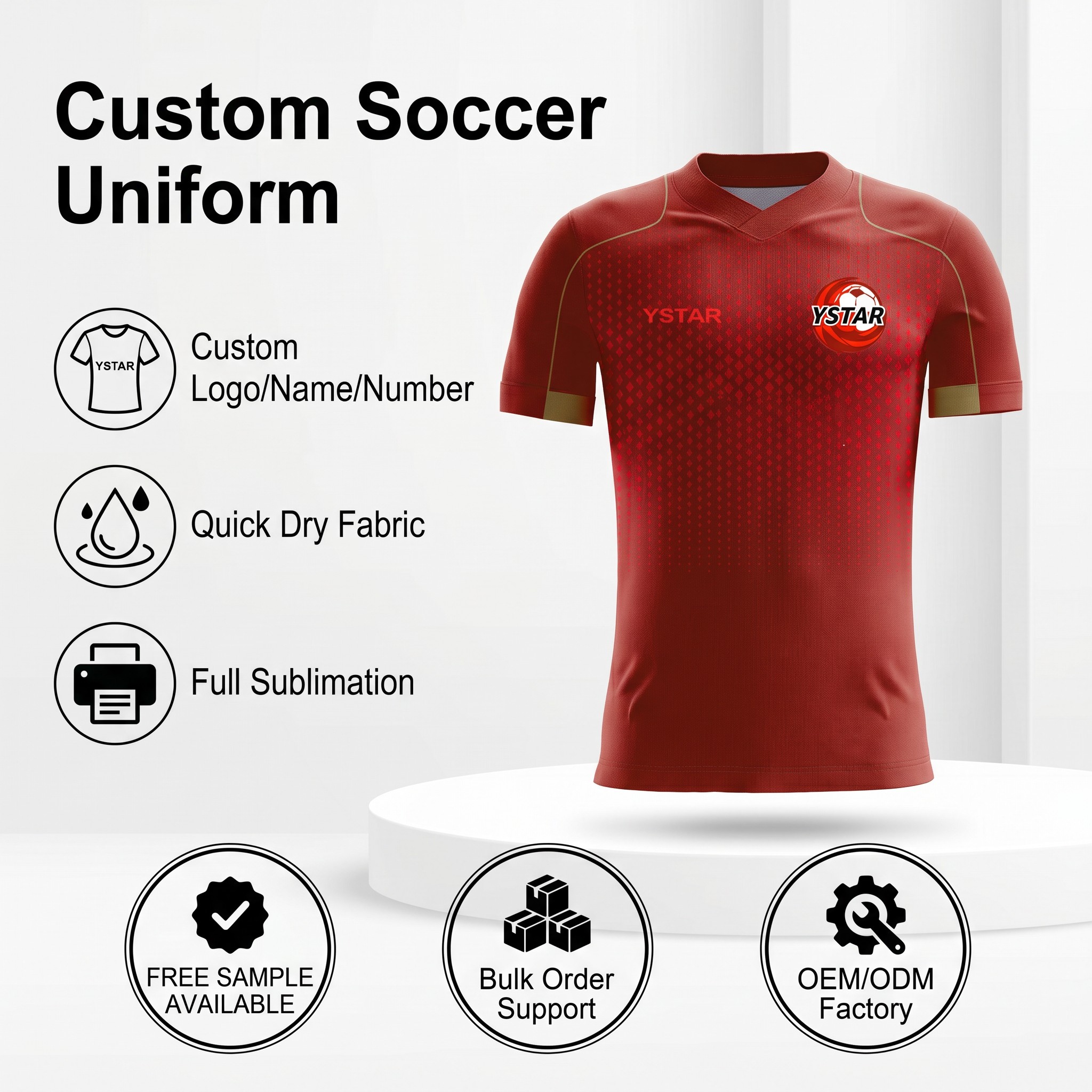
This guide explains the major cost components of custom sportswear, how to estimate the total order budget, and what businesses should discuss with a manufacturer before moving into bulk production.
The base garment cost is usually the largest component of a custom sportswear order. It covers the materials, labor, and manufacturing processes required to produce each item.
However, the base price varies according to the product type and its construction. A lightweight training shirt, a fully customized football jersey, and a basketball uniform may require different fabrics, cutting methods, stitching processes, and finishing details.
Several factors influence the base garment cost:
Fabric type: Standard polyester, breathable mesh, recycled materials, and specialized performance fabrics have different price points.
Fabric weight: Higher fabric weight can increase material consumption and cost, although the final impact depends on the fabric composition and garment design.
Construction complexity: Panel designs, reinforced seams, collars, cuffs, and other structural details affect labor and production time.
Garment style: Slim-fit competition jerseys, relaxed training shirts, and more complex uniform designs have different production requirements.
Size distribution: Extended sizes and unusual sizing specifications may affect fabric consumption and cutting efficiency.
For example, a buyer ordering 1,000 standard training shirts may receive a different unit price from a buyer ordering 1,000 fully customized match jerseys with multiple panels and specialized fabric.
When requesting a quotation, specify the exact garment style, fabric requirements, size range, and construction details. This makes supplier quotations more comparable.
Customization is one of the defining features of custom sportswear, but it can also introduce additional costs. The price depends on how the design is applied, the number of personalized elements, and the complexity of the artwork.
Common customization requirements include:
Team logos and brand logos
Player names and numbers
Sponsor logos
Custom colors and graphic patterns
Personalized labels and neck tags
Brand-specific packaging
Special trims and finishing details
Different decoration methods have different cost structures.
Sublimation is commonly used for polyester sportswear, particularly football jerseys and other performance garments. It allows complex graphics, gradients, and multiple colors to be incorporated into the design.
Its cost depends on artwork coverage, production specifications, and the manufacturer's process. For large orders with complex full-color designs, sublimation can be a practical option because the design can be integrated into the production workflow.
Screen printing may be suitable for certain simpler designs or repeated graphics, while heat transfer is often used for names, numbers, and selected logos. The appropriate method depends on the fabric, artwork, order quantity, durability requirements, and production setup.
Embroidery and sewn-on badges can create a distinctive appearance, particularly for selected logos or premium teamwear designs. However, they may require additional materials, machine time, and finishing work.
Before approving a quotation, ask whether the quoted price includes all required logos, names, numbers, sponsor graphics, and labels. A low base price may not include every customization feature needed for the finished product.
Sampling helps buyers evaluate a product before committing to bulk production. It is particularly important when developing a new sportswear collection, introducing a private-label product, or producing uniforms for a club or league.
Sample-related costs may include:
Pattern and design development
Sample garment production
Special fabric or trim preparation
Printing and logo setup
Sample shipping
Additional revisions after evaluation
Some manufacturers charge separately for samples, while others may offer a different arrangement depending on the project. Whether sample fees can be credited toward a bulk order should be confirmed in advance.
A sample should be evaluated for fabric feel, fit, color accuracy, stitching, logo placement, printing quality, and finishing details. For teamwear orders, testing the size range and checking personalization details can also prevent costly mistakes.
Although sampling adds an upfront expense, it can reduce the risk of producing hundreds or thousands of garments that do not meet the approved specifications.
Order quantity is one of the most important variables in custom sportswear pricing. Larger orders may reduce the average unit cost because certain setup, preparation, and production expenses can be spread across more garments.
For example, consider a hypothetical order with a fixed setup cost of $300 and a production cost of $8 per garment.
| Order quantity | Production cost | Setup cost per garment | Total before other expenses |
|---|---|---|---|
| 100 pieces | $800 | $3.00 | $1,100 |
| 500 pieces | $4,000 | $0.60 | $4,300 |
| 1,000 pieces | $8,000 | $0.30 | $8,300 |
In this simplified example, the average cost before other expenses decreases as the order quantity increases. These figures are illustrative only; actual garment prices and setup fees depend on the product, customization method, supplier, and order requirements.
However, placing a larger order is not always the most economical decision. Excess inventory, storage costs, slow-moving sizes, and changing design preferences can offset the savings from a lower unit price.
Businesses should consider expected demand, minimum order requirements, available storage, and the possibility of repeat orders before selecting a quantity.
For brands and distributors, it may be worth asking a manufacturer to quote several quantity tiers. Comparing these tiers helps identify the point at which additional volume creates meaningful savings without tying up too much working capital.
Custom sportswear orders often contain multiple sizes and individual personalization details. These requirements should be finalized before production begins.
A typical team order may include adult and youth sizes, different fit preferences, and individual player names and numbers. The manufacturer must manage these specifications accurately throughout cutting, printing, sewing, and packing.
Potential cost considerations include:
Extended size ranges that use additional fabric
Special fit requirements
Separate design or grading specifications
Individual names and numbers
Different sponsor or club logos across teams
Small production batches for different design variations
Not every variation automatically creates an additional charge. The impact depends on the manufacturer's pricing policy and production process.
To improve quotation accuracy, provide a size breakdown and a complete personalization list. If multiple teams are ordering together, organize the information by team, garment style, size, and player details.
A clear order sheet can reduce administrative work, avoid production errors, and make it easier to confirm whether personalization is included in the quoted price.
For sportswear brands and online retailers, the finished product may need to meet specific branding and presentation requirements. These details can affect the final cost even when the garment itself remains unchanged.
Additional items may include:
Custom woven labels
Printed care labels
Branded hangtags
Individual polybags
Barcode or SKU labels
Retail-ready packaging
Custom cartons or inserts
Standard packaging may be sufficient for bulk team orders, while retail products may require more detailed labeling and presentation.
Buyers developing a private-label sportswear collection should confirm artwork specifications, label materials, packaging quantities, and placement requirements early in the process. Custom packaging may involve minimum quantities or setup fees, especially when several different designs are needed.
It is also important to clarify whether packaging costs are included in the garment price or listed separately. This prevents confusion when comparing quotations from different manufacturers.
Shipping can represent a significant portion of the total landed cost, especially for international orders. The most suitable shipping method depends on order volume, delivery deadlines, destination, and the required balance between cost and speed.
Common logistics options include:
Air freight: Often suitable for urgent orders, samples, or smaller shipments. It can offer faster transit but generally costs more per unit than ocean freight.
Ocean freight: Often considered for larger shipments when the delivery schedule allows a longer transit time. Buyers should account for port handling, customs clearance, inland transportation, and other applicable charges.
Courier services: Commonly used for samples and small parcels, with pricing influenced by shipment dimensions, weight, destination, and service level.
In addition to the freight charge, the landed cost may include:
Export documentation and handling
Customs brokerage
Import duties and taxes
Destination handling fees
Local transportation
Cargo insurance, if selected
Storage or demurrage charges, where applicable
The exact charges depend on the destination country, product classification, shipment arrangement, and agreed trade terms.
When requesting a quotation, clarify the Incoterms® rule being used, such as EXW, FOB, or DAP, where appropriate. These terms define important responsibilities for delivery, costs, and risk. Confirm the named place or port and which charges are included.
Do not assume that a quoted garment price includes freight, import duties, or delivery to your warehouse. Ask for a clear breakdown so that the final landed cost can be estimated more accurately.
Quality control should be included in the cost evaluation, even when it does not appear as a separate line on the quotation.
A reliable production process helps reduce the likelihood of incorrect sizes, inconsistent colors, defective stitching, printing errors, and missing personalization. If problems are discovered only after the goods arrive, replacement production or rework may create additional costs and disrupt sales or team schedules.
Before confirming an order, establish clear acceptance criteria for:
Fabric composition and weight
Garment measurements and tolerances
Color and print consistency
Logo and number placement
Stitching and finishing quality
Labeling and packaging
Final quantity and size breakdown
For repeat orders, retain approved samples, artwork files, measurement specifications, and production records. These references help the manufacturer reproduce the product more consistently.
The goal is not simply to minimize the inspection budget. It is to reduce avoidable defects and protect the value of the entire order.
Once the major cost components have been identified, buyers can use a simple formula to estimate the budget.
Total custom sportswear order cost =
Garment production + customization + sampling and development + labels and packaging + shipping and handling + duties and taxes + other applicable fees
Some expenses may already be included in the garment price, so avoid counting the same cost twice.
To calculate the average cost per finished garment, divide the total order cost by the number of acceptable, saleable garments received.
Average landed cost per garment = Total landed order cost ÷ Saleable garment quantity
For example, suppose a business orders 500 customized jerseys. The following figures are hypothetical and are provided only to demonstrate the calculation.
| Cost component | Illustrative amount |
|---|---|
| Garment production | $4,000 |
| Customization | $400 |
| Sampling and development | $150 |
| Labels and packaging | $250 |
| Freight and handling | $600 |
| Duties and other import expenses | $300 |
| Total order cost | $5,700 |
If all 500 garments are saleable, the average landed cost is:
$5,700 ÷ 500 = $11.40 per garment
If only 490 garments are saleable, the effective cost per saleable garment becomes approximately $11.63. This illustrates why quality consistency and accurate production quantities matter when calculating real product costs.
Actual quotations may combine several of these categories into one price. The calculation should reflect the expenses relevant to the specific order and destination.
When evaluating custom sportswear manufacturers, comparing the final quoted unit price alone can lead to misleading conclusions. One quotation may include printing, labels, and standard packaging, while another may exclude them.
A fair comparison should use the same specifications across all suppliers.
Provide each manufacturer with the same information:
Product type and design
Fabric composition and weight
Size range and quantity by size
Logo, number, and personalization requirements
Label and packaging specifications
Sample and approval requirements
Delivery destination and deadline
Required shipping arrangement and trade terms
Then compare the following:
| Evaluation factor | What to confirm |
|---|---|
| Product specifications | Are fabric, fit, construction, and measurements consistent? |
| Customization | Are all logos, names, numbers, and graphics included? |
| Sample development | What are the fees, lead time, and revision terms? |
| Order quantity | Are there minimum quantities or price breaks? |
| Quality control | How are defects and specification deviations handled? |
| Packaging | Are labels and individual packaging included? |
| Delivery | What production and transit times are estimated? |
| Payment terms | What deposit, balance, and payment conditions apply? |
| Import costs | Which shipping, customs, and destination charges remain payable? |
A manufacturer that communicates clearly about these details can help buyers make better budgeting decisions and reduce uncertainty throughout production.
For established sportswear brands, clubs, distributors, and online stores, the first order is only one part of the overall business relationship. Repeat orders introduce additional considerations, including inventory planning, product consistency, updated designs, and the availability of materials.
Keeping approved specifications on file can simplify repeat production. Buyers should also confirm whether fabric options, colors, labels, and printing methods are expected to remain available for future orders.
If a sports club orders uniforms every season, a consistent design and sizing system can reduce the work required to prepare each new order. For an online retailer, accurate cost records can support pricing decisions, inventory planning, and margin analysis.
It is also useful to distinguish between one-time development expenses and recurring production expenses. Sampling or initial artwork preparation may not need to be repeated for every reorder, although changes to the design or specifications can create new costs.
A long-term costing model should therefore account for both the initial investment and the expected expenses of future production cycles.
Accurate cost planning begins with clear specifications and a manufacturing partner that can translate those requirements into a practical production plan.
For businesses developing custom football kits, basketball uniforms, and other teamwear, YSTAR Sportswear provides customization and manufacturing services that support the process from design development and sampling to bulk production.
When preparing an inquiry, buyers can share their design concepts, target quantity, fabric preferences, size breakdown, personalization requirements, packaging needs, and delivery destination. Providing these details allows the manufacturer to assess the project more effectively and prepare a quotation based on the actual product requirements.
Before placing a bulk order, confirm the final sample, approved specifications, itemized costs, production schedule, and shipping arrangement. These steps make it easier to understand the full financial commitment and reduce the likelihood of unexpected expenses.
Calculating the total cost of a custom sportswear order requires a complete view of the product, customization, production, packaging, logistics, and quality requirements. A competitive garment price is important, but it should be evaluated alongside product consistency, delivery reliability, and the cost of receiving finished goods in saleable condition.
For sportswear brands, distributors, clubs, and online retailers, the best approach is to establish clear specifications, request comparable quotations, account for all applicable expenses, and calculate the landed cost per finished garment.
With a transparent costing process and a capable manufacturing partner, businesses can make more confident purchasing decisions, protect profit margins, and build a more predictable custom sportswear supply program.

Learn how panel and full inspection cut defects, stabilize output and safeguard brand reputation for sportswear sourcing.
READ MORE
Turning a sportswear design concept into a market-ready product requires more than an attractive appearance. Brands must consider fabric performance, garment construction, sizing, customization methods, production costs, quality control, and delivery...
READ MORE
Calculating the total cost of a custom sportswear order involves more than comparing the unit prices offered by different manufacturers. For sportswear brands, distributors, sports clubs, and online retailers, the final cost depends on fabric selecti...
READ MORE