
In the sportswear industry, a brand's reputation is built on more than attractive designs. Customers also expect consistent sizing, comfortable fabrics, accurate logos, durable construction, and reliable product quality. For sports clubs, sportswear retailers, distributors, and private-label brands, even a small manufacturing defect can affect customer satisfaction and future sales.
This is particularly important for customized products such as soccer jerseys, football kits, basketball uniforms, and baseball jackets. These garments often feature team logos, sponsor graphics, player names, and numbers, meaning that both garment quality and customization accuracy must meet the buyer's expectations.
Choosing the right sportswear manufacturer is therefore a strategic decision. A reliable manufacturing partner helps businesses turn design concepts into consistent products, manage bulk production more effectively, and protect the reputation they have built with their customers.
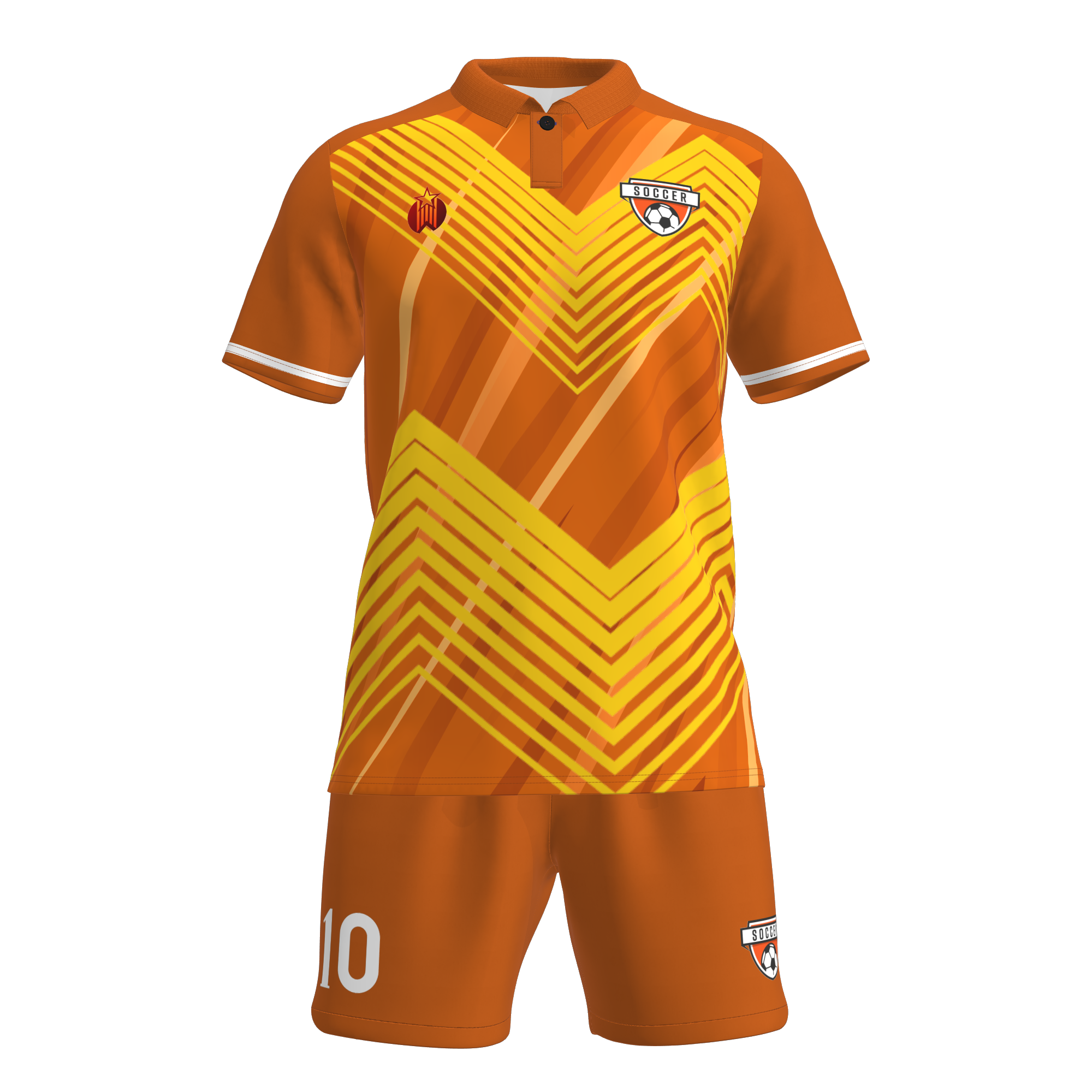
For brands developing custom teamwear collections, understanding the relationship between quality control and brand reputation is an essential step toward sustainable growth.
Sportswear combines functional performance with visual identity. A soccer jersey must represent a club professionally while providing suitable comfort and freedom of movement. A basketball uniform needs to support athletic activity while maintaining the intended design and fit. For private-label brands, every garment also represents the quality standards associated with their name.
When manufacturing quality falls short, the consequences can extend far beyond the defective product.
Inconsistent sizing can make it difficult for clubs to distribute uniforms to players. Incorrect colors or poorly positioned logos can weaken a team's visual identity. Loose stitching, damaged fabric, or poorly applied graphics may result in complaints, returns, and replacement expenses.
For distributors and online sportswear stores, these problems can affect customer reviews and repeat-purchase rates. For sports clubs, they can create unnecessary pressure when uniforms are needed before a tournament or new season.
A professional sportswear manufacturing process should therefore incorporate quality checks at multiple stages, from material selection and sample development to production inspection and final packing.
The goal is not simply to identify defective garments. It is to reduce the likelihood of defects occurring in the first place.
Fabric selection is one of the first decisions affecting the quality of custom sportswear. Different products and applications require different material characteristics, including breathability, flexibility, comfort, durability, and ease of care.
For example, soccer jerseys and basketball uniforms may prioritize lightweight construction and moisture management, while other sportswear products may require different fabric weights, textures, or levels of stretch.
YSTAR's customization offering includes material options such as 100% quick-drying polyester, poly-cotton blends, breathable mesh, antibacterial and odor-resistant fabrics, ice silk, and recycled fabric options. The appropriate choice depends on the product design, performance requirements, and target market.
However, selecting a suitable fabric is only the beginning. Buyers also need confidence that the material used in bulk production matches the agreed specifications.
A material quality control process should consider:
Composition and specifications: Confirm that the fabric matches the agreed material requirements.
Color consistency: Check that fabric colors correspond with the approved design or color reference.
Surface condition: Identify visible defects, stains, holes, and irregularities.
Comfort and flexibility: Evaluate whether the material suits the garment's intended application.
Batch consistency: Monitor differences between material batches that could affect finished products.
For sportswear brands, consistent fabric quality helps ensure that the final product delivers a predictable experience across different orders.
When discussing a new project with a sportswear manufacturer, buyers should clearly specify their preferred fabric, required characteristics, and intended use. This creates a practical reference for sample approval and subsequent production.
Customized sportswear often begins with a logo, a reference image, a design sketch, or an existing product concept. Turning that idea into a finished garment requires more than reproducing the artwork. Fabric, measurements, construction, colors, and decoration methods must work together.
YSTAR's website describes a customization process that includes providing a logo or design idea, finalizing the design, confirming the order, and proceeding to production and shipment. This process gives buyers an opportunity to clarify product requirements before manufacturing begins.
Sample approval is especially valuable for custom soccer jerseys, basketball uniforms, and other teamwear because these products frequently involve multiple design elements.
Before approving a sample, buyers should check:
Whether the garment matches the approved design
Whether fabric and color choices meet expectations
Whether the garment measurements and fit are appropriate
Whether logos, names, and numbers appear in the correct positions
Whether stitching and construction meet the agreed requirements
Whether labels, trims, and packaging details are correct
Once the sample is approved, its specifications should be documented and used as a reference for bulk production.
This reduces the risk of discrepancies between the sample shown to the buyer and the products ultimately delivered.
For private-label businesses, a controlled sample approval process is particularly important. It helps establish a repeatable product standard that can be used when expanding a collection or placing future orders.
Customization is central to teamwear manufacturing. Club emblems, sponsor logos, player names, numbers, and distinctive color combinations help identify a team and communicate its identity.
For sportswear brands, these details are equally important because they distinguish one collection from another.
Even when the garment itself is well made, customization errors can make the finished product unacceptable. A misplaced club logo, incorrect player number, misspelled name, or inconsistent graphic color can create problems for an entire team order.
A sportswear manufacturer should therefore establish clear approval requirements for customized artwork and decoration.
Important quality checks include:
Logo placement and proportions
The logo should follow the approved dimensions and positioning instructions. Consistent placement helps maintain a professional appearance across the entire uniform set.
Player names and numbers
Personalized details should be checked against the buyer's approved list. This is especially important for orders containing many individual garments.
Color and graphic accuracy
Printed elements should match the agreed artwork and color references as closely as the chosen process allows.
Decoration quality
The appropriate inspection method should be selected for the decoration technique, whether sublimation printing, heat transfer, screen printing, or embroidery.
Consistency across the order
Customized details should be reviewed across different sizes and garments to identify errors before shipment.
For distributors, sports clubs, and online sportswear stores, these checks help reduce costly corrections and protect the professional image presented to end customers.
Clear artwork files, accurate order lists, and documented approval procedures make this process easier for both the buyer and the manufacturer.
Sizing is another important quality factor in sportswear manufacturing. Teamwear orders commonly include a range of sizes, and customers expect garments with the same size label to follow consistent measurements.
If sizing varies significantly between garments, clubs may struggle to distribute uniforms correctly. Retailers may face additional exchanges, while private-label brands may receive complaints that undermine confidence in their products.
A structured sizing process should begin with an agreed measurement chart. Critical dimensions should be defined before production, and size grading should be checked across the required range.
For custom sportswear projects, buyers should pay attention to:
Chest, body length, and other relevant garment measurements
Sleeve length and garment proportions
Differences between fitted and relaxed styles
Consistency across the full size range
Measurement tolerances agreed upon before production
These details are particularly relevant when developing custom soccer jerseys and basketball uniforms for teams with players of different ages and body types.
For brands offering multiple product categories, a consistent approach to measurement documentation can also make product development more manageable.
A dependable sportswear manufacturer should be able to discuss sizing requirements before production and help clarify the specifications needed to achieve the intended fit.
A defect discovered early is generally easier to address than one found after an entire order has been completed.
For this reason, quality control should not rely exclusively on final inspection. Appropriate checks during production can help identify issues before they affect a large quantity of garments.
In sportswear manufacturing, inspection points may include fabric cutting, sewing, garment assembly, printing, finishing, and packing.
During cutting, material panels may need to be checked for visible defects and alignment with the cutting plan. During sewing, inspectors may examine seam construction, stitch consistency, and loose threads. During printing or decoration, they may verify artwork alignment, color appearance, and application quality.
The exact procedures depend on the product, manufacturing process, and agreed quality requirements.
For example, a large order of customized football kits may involve multiple sizes, garment components, and personalized details. Without suitable production controls, a small specification error can be repeated across many items.
A structured inspection process helps teams identify such problems sooner and take corrective action before they lead to unnecessary rework.
When evaluating a sportswear manufacturer, buyers should ask how quality checks are incorporated into production and how identified problems are recorded and addressed.
Before a bulk sportswear order is shipped, the finished products should be checked against the agreed specifications and acceptance criteria.
Final inspection is particularly important for international B2B orders, where returning garments or arranging replacements may involve additional freight costs and delivery delays.
Depending on the product requirements, final inspection may cover several areas.
Garment appearance and workmanship
Check for visible fabric defects, stains, loose threads, damaged seams, and other unacceptable flaws.
Measurements and sizing
Verify selected garment dimensions against the approved measurement chart and agreed tolerances.
Customization details
Confirm that logos, names, numbers, and graphics match the approved designs and order information.
Quantity and size distribution
Check that the number of garments and size breakdown match the purchase order.
Labels and packaging
Verify that labels, folding, individual packaging, and carton details meet the agreed requirements.
For buyers managing large orders for sports clubs, distributors, or retail channels, these checks provide an additional opportunity to identify problems before products reach the end customer.
It is also useful to agree on inspection requirements before production starts. When the buyer and manufacturer share the same acceptance criteria, product evaluation becomes clearer and disputes are easier to manage.
For a growing sportswear business, quality must remain stable as order quantities and product ranges expand.
A sample order may look satisfactory, but maintaining the same standard across larger production runs requires clear specifications, coordinated processes, and appropriate quality monitoring.
This is especially important for brands ordering custom soccer jerseys, basketball uniforms, and other teamwear across multiple seasons.
A club may need to reorder the same uniform design. A distributor may need to replenish a popular product. A private-label brand may introduce new colors while retaining its established fit and construction standards.
In each case, inconsistency can create unnecessary problems.
To support repeatable production, buyers and manufacturers should maintain clear records of important product information, including:
Approved designs and artwork
Fabric specifications and color references
Measurement charts and grading details
Decoration methods and placement instructions
Construction and finishing requirements
Packaging specifications and inspection criteria
These records help provide a reference for future orders and reduce the risk of relying on memory or incomplete communication.
For businesses working with an OEM sportswear manufacturer, standardized product information also helps simplify the development of new variations within an established product range.
Consistent manufacturing quality makes it easier for brands to scale their business while maintaining the customer experience that supports repeat purchases.
When comparing sportswear manufacturers, buyers often begin with the unit price. However, the purchase price alone does not reflect the full cost of obtaining and delivering acceptable products.
Defective garments may require rework, replacement, additional inspection, or disposal. Incorrect customization can delay an entire team order, while inconsistent sizing may generate returns and customer service costs.
For businesses working with strict seasonal schedules, these problems can also affect sales opportunities and customer relationships.
A reliable quality control process helps reduce avoidable costs by identifying problems earlier and establishing clear procedures for managing defects.
This does not mean that every manufacturing issue can be eliminated. Instead, buyers should look for a supplier that communicates transparently, follows agreed specifications, and responds systematically when problems occur.
When assessing a sportswear manufacturer, it is worth considering the overall value of the partnership, including product consistency, communication, production planning, and the supplier's ability to support repeat orders.
For sportswear brands and distributors, dependable quality can be an important part of maintaining healthy margins and building customer loyalty.
Selecting a suitable manufacturing partner requires more than reviewing product photos or comparing quotations. Buyers should also evaluate whether the supplier can understand and consistently deliver their product requirements.
For customized sportswear, useful questions include:
Can the manufacturer support the required garment categories and customization methods?
How are fabric options and product specifications confirmed?
What is the process for reviewing and approving samples?
How are logos, player names, and numbers checked?
How are garment measurements and size grading controlled?
Which quality checks are performed during production?
What is included in final inspection before shipment?
How are quality problems communicated and resolved?
Can approved specifications be referenced for repeat orders?
Buyers should also clarify order quantities, sampling arrangements, production lead times, and packaging requirements before confirming a project.
For private-label brands, design support and product development capabilities may be equally important. A manufacturer that can coordinate design confirmation, sampling, and bulk production can help reduce communication gaps between different stages of development.
YSTAR presents its services around custom sportswear development, including design support, sampling, and production for soccer uniforms and other sportswear categories. Buyers considering a project can use these stages to establish clear expectations for both product customization and quality requirements.
The key is to evaluate the manufacturer's actual processes and determine whether they match the needs of the intended product and order.
Founded in Quanzhou, China, in 2014, YSTAR focuses on custom soccer uniforms and also offers other sportswear categories, including basketball uniforms and baseball jackets. Its website describes an integrated service process covering design and development, sampling, and production, alongside quality inspection.
For brand owners, sports clubs, distributors, and online sports stores, this type of service structure provides a starting point for discussing product requirements within one manufacturing relationship.
A successful custom sportswear project begins with clear communication. Buyers can provide their logo or design concept, identify their preferred fabric and garment specifications, confirm personalization details, and review the proposed design before production.
For projects involving bulk teamwear, it is also important to confirm the expected size distribution, approved artwork, product specifications, inspection requirements, and delivery schedule.
These details help establish a common understanding before manufacturing begins and give both parties a clearer basis for evaluating the finished order.
By discussing quality expectations early, buyers can make better-informed decisions when developing custom soccer kits, basketball uniforms, and other branded sportswear products.
Quality control is an essential part of building a successful sportswear business. From fabric selection and sample approval to customization accuracy, sizing consistency, and final inspection, every stage can influence the customer's experience with the finished product.
For sports clubs, distributors, and private-label brands, these details affect more than garment appearance. They can influence customer satisfaction, repeat orders, operating costs, and long-term brand credibility.
Working with a suitable sportswear manufacturer helps businesses establish clearer product specifications, manage customization requirements, and approach bulk production with greater confidence.
YSTAR provides custom sportswear services for businesses and organizations developing soccer uniforms and other teamwear products. If you are planning a new collection or preparing a bulk uniform order, defining your design, fabric, sizing, personalization, and quality requirements at the beginning of the project can help create a stronger foundation for production.
Ultimately, protecting brand reputation begins before the first garment is shipped. It starts with choosing the right manufacturing partner, communicating expectations clearly, and making product consistency a priority throughout the manufacturing process.
2026 FIFA World Cup fuels jersey customization boom. Digital tech, phygital and sustainability reshape fan sportswear creation and retail.
READ MORE
Turning a sportswear design concept into a market-ready product requires more than an attractive appearance. Brands must consider fabric performance, garment construction, sizing, customization methods, production costs, quality control, and delivery...
READ MORE
For organizations that manage multiple sports teams, developing custom team uniforms requires careful coordination across different sports, age groups, performance requirements, and budgets. A football team may need lightweight jerseys designed for o...
READ MORE