
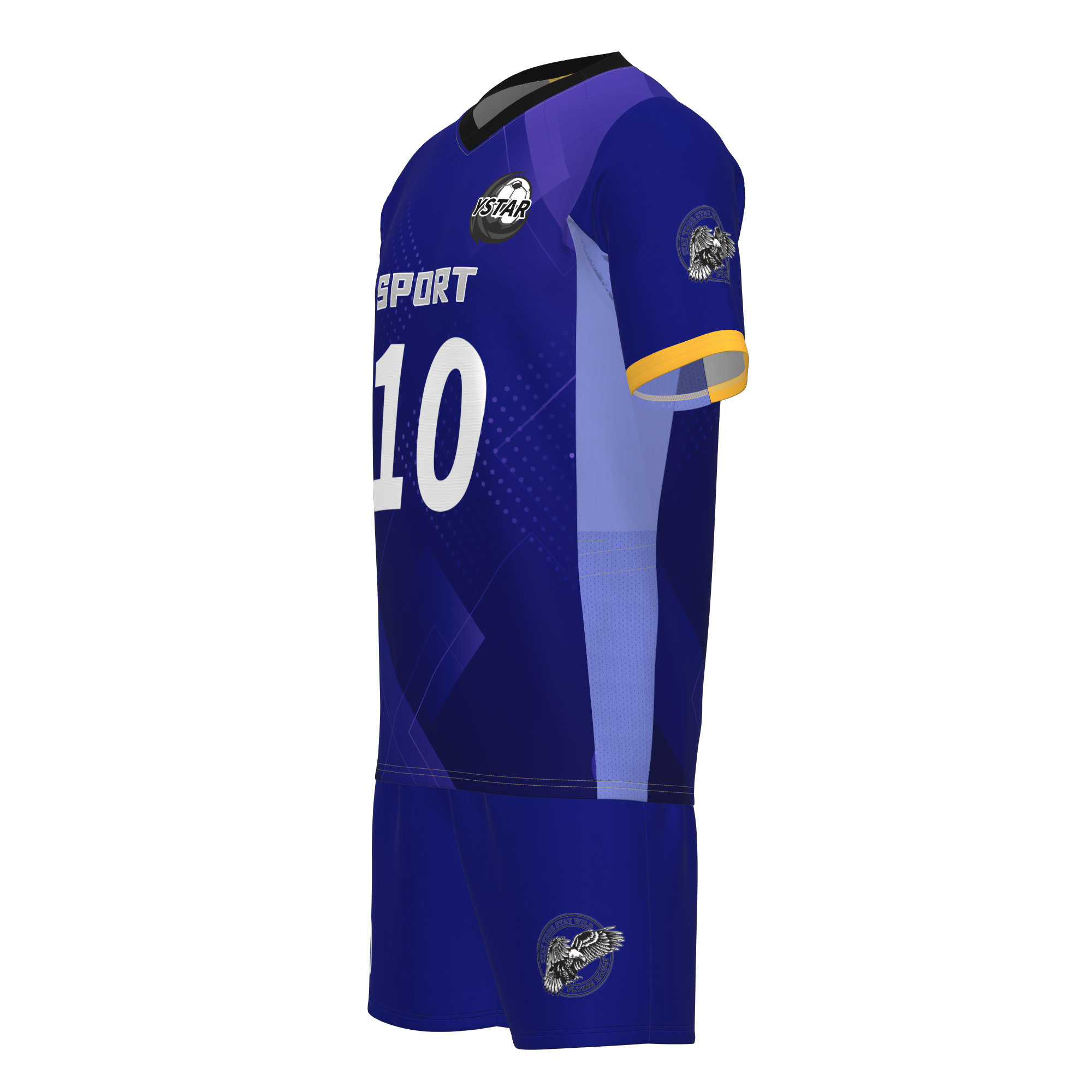
If you've ever wondered why two jerseys that look similar feel completely different on the field, it's almost always the fabric. Team sports uniforms for competitive play are built from a handful of core materials—each with specific strengths, weaknesses, and ideal use cases. Picking the wrong one means the kit gets sweaty, heavy, or restrictive mid-match.

Below, we break down the fabrics you'll most commonly see on competitive kits—what each one does well, where it falls short, and which sports it suits best.
1. Polyester: The Workhorse Fabric
If you see a competitive jersey, there's a good chance it's 100% polyester—or mostly polyester. This is the default fabric for a reason. Polyester is hydrophobic, meaning it doesn't absorb much water. Instead of soaking up sweat and getting heavy, it pulls moisture to the fabric surface where it evaporates quickly. The jersey stays light, even during a high-intensity match.
Polyester also holds up well. It resists stretching out, fades slowly through repeated washes, and doesn't break down from sweat or sun exposure. For programs that need kits to last a full season (or longer), this durability matters. It's also the go-to fabric for sublimation printing—full-color graphics and sponsor logos bond with the fibers rather than sitting on top.
Where it falls short: pure polyester can feel a bit "plasticky" to some athletes, and it traps heat if the weave is too tight. That's why manufacturers often blend it or add mesh panels.
2. Polyester-Cotton Blends: The Comfort Compromise
Some athletes don't like the feel of 100% polyester—it can be sticky or scratchy against the skin. Polyester-cotton blends (typically 80/20 or 65/35) add cotton's soft hand feel while keeping most of polyester's performance benefits. The result: a jersey that feels more natural against the skin, still wicks reasonably well, and is more breathable than pure polyester.
This blend is common in training kits, casual jerseys, and youth programs where comfort matters more than elite-level sweat management. It's also generally cheaper than high-performance pure polyester. The tradeoff: it absorbs more water than pure polyester, so it gets heavier during long, sweaty matches. Best for low-to-moderate intensity play, not maximum-effort competition.
3. Spandex Blends: Four-Way Stretch for Dynamic Movement
Adding 2–5% spandex (also called elastane) to polyester changes the feel of the kit significantly. The fabric stretches in all directions—up, down, side to side—and springs back into shape. This is why basketball kits, compression tops, and form-fitting soccer jerseys use spandex blends.
The benefit: the kit moves with you. When you jump, cut, or reach, the fabric stretches rather than pulling tight. It also hugs the body without sagging, which some athletes prefer for a streamlined feel. The tradeoff: spandex breaks down faster than pure polyester under heavy use and repeated washing, so kits with higher spandex content may not last as long. For most competitive teams, 2–5% is enough stretch without sacrificing durability.
4. Mesh Panels: Targeted Ventilation
Mesh isn't usually the main fabric—it's added in specific zones where athletes sweat the most: underarms, along the sides, across the upper back. These open-weave panels let air circulate directly to the skin, cooling you down exactly where you need it.
Good kit design uses mesh strategically. If the whole jersey were mesh, it would be too flimsy and not provide enough coverage. But targeted mesh panels give you breathability where it counts while keeping the rest of the jersey structured and durable. This is why you'll see mesh inserts on almost every high-performance kit, regardless of the main fabric.
5. Fleece-Backed or Brushed Polyester: Insulated Fabric for Winter Play
For outdoor sports in cold weather—winter soccer, fall football, early-morning training—standard polyester isn't enough. Fleece-backed or brushed polyester has a soft, fuzzy interior that traps warm air next to the skin. It still wicks moisture from the inside, but the brushed layer adds insulation.
These fabrics are heavier than standard jerseys, so they're usually used for training tops, warm-up jackets, or cold-weather kits—not for full match play in mild conditions. The key is balance: too much insulation and you overheat; too little and you're cold. Most programs have both a standard weight kit and a heavier option for cold days.
How to Choose the Right Fabric for Your Sport
There's no single "best" fabric—it depends on your sport, your climate, and your athletes' preferences. As a general guide:
• Basketball, volleyball (indoor, high intensity): 100% polyester with mesh panels—maximum breathability in a hot gym
• Soccer (outdoor, variable weather): polyester-spandex blend for stretch and freedom of movement
• Training kits: polyester-cotton blend for comfort during practice sessions
• Cold-weather play: brushed or fleece-backed polyester for warmth
• Contact sports (football, rugby): heavier polyester with reinforced seams for durability
FAQ
Why is polyester the most common fabric in competitive uniforms?
It does the most things well: wicks sweat, dries fast, holds its shape, resists fading, and works with sublimation printing. No other fabric combines all of these properties at a similar price point. Cotton is comfortable but gets heavy; spandex adds stretch but wears out faster. Polyester is the baseline that other fabrics are blended into.
Are cotton uniforms okay for competitive play?
Pure cotton isn't ideal for high-intensity competition. It absorbs sweat, gets heavy, and stays wet—which can cause chills and chafing. Polyester-cotton blends are fine for training or lower-intensity play, but for matches where performance matters, synthetic fabrics are the standard.
How much spandex is enough in a performance kit?
Most competitive kits use 2–5% spandex. That's enough to give the jersey four-way stretch and a snug fit without making it too tight or sacrificing durability. Higher percentages (10%+) are usually reserved for compression garments, not standard team uniforms.
Table of Contents
- 1. Polyester: The Workhorse Fabric
- 2. Polyester-Cotton Blends: The Comfort Compromise
- 3. Spandex Blends: Four-Way Stretch for Dynamic Movement
- 4. Mesh Panels: Targeted Ventilation
- 5. Fleece-Backed or Brushed Polyester: Insulated Fabric for Winter Play
- How to Choose the Right Fabric for Your Sport
- FAQ